Showing posts with label professional development. Show all posts

Monday, July 30, 2018

Summer Reading - American Libraries June 2018

So one of my summer goals was to catch up on all of the ALA publications that have piled up over the school year. I've managed to read one so far. #babysteps

Supporting Middle School Reading by Kelsey Cohen (p. 28)


I love the idea of capturing data online and presenting it graphically so that the dashboard serves as inspiration.

Thoughts: I read A TON, and keep students up-to-date on what I enjoyed by posting printouts of book covers on a bulletin board. I blog my recommendations and post on Facebook for parents. I love when kids are surprised that I've read a book they're checking out or returning and can comment on it. I support Goosebumps and Captain Underpants and graphic novels as "real" books.

But there's only so much I can do split between two schools and spending only 35 minutes per week with each class. And I can't say that there's a true reading culture at either of my schools.

Yes, there are reading log requirements for most classrooms. But how many kids are looking at the clock after each page read? How many parents just sign whatever's noted? How many teachers are  reading for 20 minutes every night themselves?

I know that there's not enough time in the day for anyone in an elementary school. Our district introduced many new demands last year, and "sustained silent reading" is looked upon by some administrators as "wasted instructional time." But, as stated on Twitter last week:

twitter.com/watkinskaleb

So what can I do to have more of an impact? Not sure, to be honest. I have the kids in grades 3-5 create reading plans (TM Mrs. Melanie Roy) and add to them when we get batches of new books (which occurs a lot more frequently at one school, because I'm able to spend book fair money). But most of the kids forget about them as soon as I've collected them for safekeeping. I think only one student proactively asked to check theirs all last year.

scholastic.com
Takeaways: Devise an online way for them to maintain reading plans ... maybe use Destiny Quest? Hmm ... just emailed our state organization listserv and learned that the functionality is migrating to Discover this year. Will have to wait for that. 

Add a booktalk requirement to everyone's library grade. Including K. Maybe ask the principals if I can have some of them delivered as morning announcements. 

Encourage teachers - and the principals! - to share what they are reading all year, not just during Reading Week.


"Beyond Fake News" by Meredith Farkas (p. 78)


The standard web evaulation checklists (e.g. CRAAP) may not really work after all for students, according to an article on InsideHigherEd.com:
"As we gain experience, we come to “know” things, including which sources may be reliable, as well as the ways sources that seem reliable on the surface may be biased. The CRAAP test is an effort to codify what sophisticated source evaluators are doing, except it isn't an accurate reflection of the knowledge and condtions under which we work. 
Experienced academics don’t actually use the CRAAP test. The CRAAP test is an approximation of a much more sophisticated process rooted in that domain knowledge. Giving it to students as a substitute for knowledge may not be doing them any favors."
twitter.com/sjunkins
Michael Caulfield recommends "going beyond the About page of the source to see what others ... say" and "trying to follow the information back to the original source."

Thoughts: I feel that for elementary school students, educators can cut down on bad web searches by providing vetted sources and explaining WHY they are quality. And classroom teachers may want to have their librarians check the list ... I once saw All About Explorers listed as a legit source for a 5th grade project.

I've noticed that the kids really struggle with processing information and putting it into their own words; they should be focusing on USING the information at this point, in my opinion, and get those skills down before wading through Google search results (of which they only ever use whatever's above the fold, as I have witnessed many many times).

Takeaway: Remind teachers on a regular basis that I can create LibGuides for research projects. Only two people took me up on it last year.


"Data Security" by Nicole Hennig (p. 80)


I realized that I haven't backed up any new documents that I created over the past school year. Yikes. Luckily, I just found a new flash drive while sifting through the piles of stuff on my desk, so I will make sure to do this ASAP. And then keep it somewhere that is not my laptop in case the house burns down.

Hennig recommends paying for cloud backup services such as Backblaze, IDrive, Carbonite, and SpiderOak One.

She also recommends using a password manager. I have a formula for my passwords that usually doesn't fail me, but I'm intrigued by her assertion that "password managers can generate secure, hard-to-crack passwords for you and provide browser plug-ins that will autotype the password into login pages so you never need to remember them." She mentions two: LastPass (free) and 1Password.

commonsense.org
Thoughts: It makes me bananas when students AND TEACHERS keep documents on individual machines, although my schools are moving towards Google for everything, which is cutting down on that practice. I already do Common Sense Media's password lesson with grade 4, and I just saw that they have a version for younger grades. 

Takeaway: Add password lesson to Grade 2 curriculum.


Sunday, October 23, 2016

I MAY be a Little Behind - Ideas/Notes from ALA/AASL Pubs

The stack of magazines and journals under my desk is ridiculous. I'm working backwards in time with the goal of having everything read by the end of the school year. Today: May 2016.


Privacy


behaviour.education.qld.gov.au/
I like "the National Academy of Sciences' metaphor of the internet as a swimming pool: It offers plenty of opportunities for recreation and learning, but it can be dangerous, too." As Deborah Caldwell-Stone from ALA's Office for Intellectual Freedom says, "You can teach them how to swim, or you can put up a fence. What happens when they climb that fence and open the gate?"

Denise Agosto of Drexel University thinks we're using too many scare tactics when educating kids about online privacy. I'm going to look into the San Jose (CA) Public Library Virtual Privacy Lab.

Yet another goal: Some kind of event for parents during Choose Privacy Week. I wonder how they would take my suggestion to stop posting so many pictures of their kids when they're on vacation? "Hey, robbers, we're not home!" Do they realize that they're creating a digital footprint over which the kids have no say? Sometimes beginning in the womb?

Our students all have Gmail accounts, and for the first time, they're accessible via Aspen. Maybe I'll start some kind of "pro tip" communication for them. And ask my principals to include more info from me in their parent emails. About all kinds of things, not just privacy.


Weeding


Idea #4,589: Post "Weed of the Week" somewhere, in the spirit of AwfulLibraryBooks.net (tagline: "Hoarding is not collection development"). I regret not taking pictures of some of the gems I've gotten rid of so far.


Interactive Readalouds


From an article by Priscille Dando in Knowlege Quest:

"Joan Frye Williams' analogy frames libraries as no longer being grocery stores stocked with ingredients but kitchens where ingredients are combined to create something new."

I like the idea of working with classroom teachers to choose readalouds that can be delivered during library time.

"Readers never ask a question that they already know the answer to. As the reader, ask interpretive questions rather than factual."


Questioning as a Literacy


From an article by Sara Kelley-Mudie and Jeanie Phillips in Knowledge Quest:

"Understanding a question is different from answering a question; it means being able to form an idea of what an answer might look like and what type of information is being sought."

Write arounds

Question Formulation Technique from the Right Question Institute

Sample prompts: "How would it be different if ..."; "What is the purpose of ..."

Criteria for prioritizing questions

  • Which questions will best help us solve the problem?
  • Which questions will make interesting research questions?
  • Which questions can we answer through direct observation?
  • Which questions can we develop an experiment to answer?


Data Literacy


From an article by Kristin Fontichiaro and Jo Angela Oehrli in Knowledge Quest:

"Students often believe that numbers are objective, though data in the real world is rarely so. In fact, visualized data - even from authoritative sources - can sometimes be anything but." Categories include:


  • Statistical literacy: "Discerning correlation from causation; recognizing the difference in the meaning of mean, median, and mode; understanding what margin of error signifies in polling data; recognizing potential biases in collected data (e.g., where did they gather it from?)"
  • Data visualization: "Having skills to create and comprehend mapped data, graphs, pie charts, and emerging forms of visualizations"
  • Data in argument: Infographics need to make a point, not just be a random collection of facts
  • Big Data and citizen science: How much personal data is too much?
  • Personal data management: "While students might like seeing relevant ads or music recommendations that match their favorite, few know it is because of the breadcrumb trail they leave behind. ... "today's online content creators and social networks are engaged in a balancing act between maximizing advertising revenues and delivering quality content."
  • Ethical data use: Realizing that data can be "framed, edited, manipulated, or otherwise modified" to sway or confuse


ala.org: click to link to PDF version

Gaming as Meaningful Education


I've had board games available in my libraries for years. As the ALA infographic notes, "In game play, players work towards mastery and rarely experience failure as an obstacle to trying again and again. There is something in play that gives players permission to take risks considered outlandish or impossible in 'real life.' There is something in play that activates the tenacity and persistence required for effective learning."

Other key points:


  • "Many board games encourage players to detect patterns, plan ahead, predict the outcome of alternative moves, use deductive logic, and learn from experience."

  • "Research shows there is a link between playing certain types of board games and scoring well on math tests."

  • Games are a more powerful learning tool when we teach kids that problem-solving ability is like a muscle: It can be strengthened with practice and learning."


Source Illiteracy

imgflip.com
This article by Nora G. Murphy in Knowledge Quest reminded me of when I worked for Johnson & Wales University, and The Daily Show wanted to do an interview with one of our deans re: the new "Sip and Spit" law in Colorado that allowed underage students to do wine tastings. "It's a national news show!" some people exclaimed. But my friend/colleague Stacie and I could only imagine the questions a comic fronting as a serious reporter would ask. We turned down the interview.

Kids need to have "the ability to interpret from context, to know what to ask, to read the clues, and to use the understanding brought from knowing about other sources." That understanding is hard to teach, because "source literacy is usually gained through experience and not instruction."

I like Murphy's suggestion of having kids create source banks, similar to Pinterest pages with boards for different types.


Creating a Literacy Plan for Your School

Realize that it "takes years of intentional effort" and don't "try to tackle every grade at once."

  1. Be the leader - Gather a group of stakeholders and start with SOMETHING with the knowledge that it will undergo a ton of changes
  2. Know what you can and can't control - Focus on what you can do without relying on anyone else
  3. Make the goals visible and generate excitement - Get decent posters made; present at meetings with teachers, parents, and administrators
  4. Determine where the skills will fit - Build a big-picture view by meeting with every teacher, even just for 20 minutes, to create a comprehensive document re: what is already in place and where the holes are
  5. Plan, plan, plan - Map out ways for student understanding to grow and build over the year through all subjects/classes
  6. Assess, rinse, repeat - Share accomplishments and make adjustments as necessary


Saturday, August 27, 2016

Summer Reading - Ideas and Notes from Professional Journals

School starts in a few days, and I finally just now getting around to tackling the huge stack of professional reading I was supposed to have kept up with all summer. Here are some takeaways:

Advocacy


AASL has a new toolkit for educating principals and classroom teachers about "the positive impact school librarians and school library programs can have on student achievement."


Design Thinking


In the June 2016 issue of American Libraries, Linda Braun writes about using the design thinking approach to problem-solving. It's pretty similar to the scientific method, what with coming up with and testing a hypothesis (or prototype).
designthinkingforlibraries.com
She gives a link to a toolkit for libraries

Oh, my, maybe this can be a PGG in itself ... the site says, "On average, working through the entire toolkit can take 5-8 hours a week for the next six weeks, depending on how much time you have on a weekly basis with a team or on your own."

I'll send my principals a link to the toolkit for eductors to send out to my colleagues.


Volunteers


Yet another goal - have more volunteers in the library. A book on the topic - Library Volunteers Welcome! - is coming out in the fall. One recommendation is to match the person with the activity they're most interested in and able to perform. Sadly, not everyone is dying to put away nonfiction. 

windwoodfarm.org
I definitely need to look into the feasibility of reaching out to other organizations, like high schools, colleges, and companies that place value on community involvement. One mom did contact me because her workplace will give a $1,000 grant to the school if she puts in 100 hours of time. Godsend! Hmm ... there's something called VolunteerMatch that I will investigate. 

I also need to come up with more things that volunteers can do from home. Maybe they can do blog posts re: local literacy events and new books in the catalog?

Cassie Hileman of Harmony School of Excellence in Houston has a nice idea: award exceptional voluhteers with a bookplate to place in a library book of their choosing. I could do this at the spring book fair. 


Social Media in the Classroom


I have tweeted authors and illustrators about their books making it to our Mock Caldecott finals, or being used in a lesson, and it's always very exciting to get a response! I'd like to do more of this, sharing questions or comments from kids. I guess I should set up accounts for my two schools for that and leave @mercolleen as my personal PLN account.

Quote from Burlington (MA) Public Schools assistant superintendent Patrick Larkin in summer issue of Entrsekt: "Social media presence is the new resume." Kids need to know about digital citizenship.

Possible to-do: Look into Edmoto as a way for my kids to interact across town. Or is it just adding too much if I already have a blog and a LibGuide? Maybe too much to manage effectively, but not too much to offer?


Grit


In American Educator, Daniel T. Willingham writes about how "Grit' is trendy, but can it be taught?" He defines grit as "passion and perseverance for long-term goals," and points out that long-term in this case can mean over several YEARS. Grit "seems to measure one's willingness to keep going even when the task becomes arduous."

Grit is related to conscientiousness ("doing what you're supposed to do right now") and self-control ("avoiding impulses to do something else"). These two traits are more applicable to the classroom. However, if you want to try and teach grit-related behaviors, he gives these suggestions:


  • "help students identify what they are passionate about
  • encourage them to pursue their passion
  • teach them how to find resources to pursue their passion
  • teach them to learn from failure
  • teach them the importance of practice
  • teach them when to persist and when to seek a different path if they encounter an obstacle"


Writing for Understanding


In American Educator, an article adapted from a book by the Vermont Writing Collaborative makes the case that the way we've been teaching the writing process (prewriting, drafting, revising, editing, and publishing) isn't enough these days. Kids are presented with a glut of information and have trouble turning it into a coherent piece. They need:

  • "opportunity to reflect on their knowledge, to analyze information, to synthesize ...
  • a framework for organizing and developing ideas
  • frequent opportunities to write"

One tenet of the authors' process is "oral processing," which is something I've done with my kids. I don't give long writing assignments, but sometimes students have trouble even coming up with a few sentences. I ask struggling kids to just tell me what they want to say, and they're usually relieved that they can simply transcribe what they said. 

k6educators.about.com (Getty Images)
If I were to give a more complex research assignment, the students would need to soak up as much information as possible before even attempting to get anything down on paper. I feel like all too often, teachers give due dates that allow only for looking up a few facts and regurgitating them. The kids aren't becoming experts on their topic ... indeed, they usually aren't given much choice on their topic, and so couldn't care less about gathering the knowledge in the first place.

Since I only see the kids once a week, and have only about 20 minutes for lessons, I don't attempt long-range research projects (I tried one year, and it was a disaster). The article states that "students cannout and will not become effective writers if this kind of instruction occurs in a fragmented or decontextualized way." The same applies to research skills. 

Ideally, I would be able to partner with classroom teachers and give instruction on using databases and crediting sources at the exact time the kids need it. Teaching these concepts in a vaccum does nothing. The kids don't remember anything I went over the previous month in library, and I find them copying from Wikipedia in the back of the room as they frantically try to finish something for social studies or science. It makes me bananas. The way to go, I think, is to teach the teachers. I'm just not sure when this will happen, given that my schedule between two schools is hideous. I'd love to meet with grade-level partners during their common planning, but that's when I have their students!


Friday, August 26, 2016

Ideas from Sept/Oct 2016 American Libraries

Upcoming Events to Celebrate

ala.org
  • September: Library Card Sign-Up Month. Our department met this week and discussed partnering with the public libraries in some way to try and get all students to sign up for a library card. One roadblock is that an adult signature is required for anyone under the age of 14. Which means that said adult needs to go to the library with the kid to get a card, which is not always possible. We're looking at some way to have parents sign something at home and then have the kids get their cards at school.

  • October 16-22: National Friends of Libraries Week. Our state organization is trying to come up with a toolkit for school libraries to create Friends organizations. The problem is that most public library Friends pay dues, and that's something we might need school committee approval on. I need to look into this more ... oh, look, a toolkit has already been created by United for Libraries


ala.org

Readers' Advisory


I show my kids how to use Novelist (we have a subscription through our statewide consortium) and Goodreads to find a new book to read. Here are some libraries who are doing it very personally:


I'm thinking that a goal for the future could be to set up an online book recommendation service for my kids like Darien's "You Are What You Read Next."


Web Site Accessibility


Meredith Farkas points out that now people are able to create their own web content v. hiring a designer who would keep accessibility in mind, and we usually aren't really thinking about it. She gives some tips: add alternative text descriptions to images; make sure title attributes of links are clearly described; check this list from the University of Washington.

Farkas also notes that "accessiblity isn't just a nice thing to do - it's a legal requirement. Several colleges have been subject to lawsuits from the National Federation of the Blind in recent years for requiring the use of technologies that were inaccessible."


Coding in the Library


The CS4RI initiative championed by our governor seeks to have computer science offered to all public school students by December 2017. Linda Braun mentions the ALA/Google "Libraries Ready to Code" project, but I can't find anything much about it online besides a press release announcing its launch. I've heard great things about the code.org curriculum, but here's the thing:

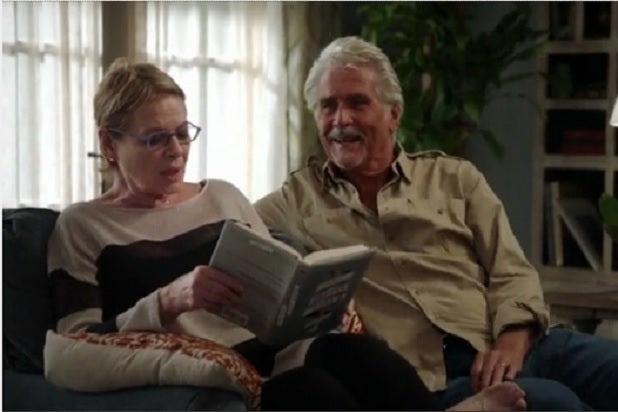
The longer I've been teaching in an elementary school library (I'm going into my 6th year), the more I believe that my most important role is to foster a love of reading for pleasure. It sounds so low-tech and old-fashioned, but given that kids are bombarded with required texts that in turn require them to parse out theme, author's purpose, etc., they just don't get much time during the day to read for fun. And when they go home, most of them are bombarded with other ways to spend their time.

thewrap.com ... and yes, I realize that grandparents reading
may not inspire kids, but I couldn't find a photo online
of the youngest daughter reading her book
RELATED NOTE: I watched a couple of episodes of Life in Pieces last night, and was struck by the fact that several characters were shown reading at the start of a few scenes. Another reason it's a great show!

BACK ON TOPIC: Colleagues have told me that there are lots of code.org lessons that don't even require computers; they focus more on "computational thinking" and problem-solving. Which I'm all for. However, I was hired to teach information/media literacy, as well as to run a circulating library. I already don't have enough time to cover everything I'd like in the (max) 12 instructional hours PER YEAR I have my kids. I'd be happy to deliver a coding/tech curriculum, but it would have to be during a dedicated coding/tech time.


Professional Development

I'm not being formally evaluated this year, but I have ideas for my Professional Growth Goal for next year. Being Indispensible: A School Librarian's Guide to Becoming an Invaluable Leader by Ruth Toor and Hilda K. Weisburg will probably factor into it.

Friday, August 19, 2016

Ideas from March/April 2015 American Libraries

Gamification


What learning/circ challenges can you present your students in the guise of a game? Bohyun Kim points to thefuntheory.com for lots of examples of gamification influencing consumer behavior. I wish the article include specific ideas for libraries. But I guess that's up to us! I've found that any time I present an assignment as a competition between teams, the kids' engagement goes up exponentially.

Edited to add this from summer 2016 issue of Entrsekt: Gamification strategies include leveling up, missions, visual maps, rules and obstacles, and extended simulations.

Pegagogy/Curriculum Development


An article by Joan Lippincott suggest several ways in which librarians can support "new types of assignments that require students to produce projects using a variety of technologies as a means to:

  • increase student engagement with course content
  • provide students with opportunities to explore new media technologies and innovate in their academic work
  • increase individualization of assignments, which can also reduce plagiarism
  • facilitate student expression in media that are not purely textual"

FMSS Library
The article is geared towards academic libraries, and I have to say, one of the scariest sentences in the article is " ... it is also often noted that few faculty have had any formal preparation for teaching. Similarly, there are many academic librarians who have had no formal preparation to take on teaching roles." Yikes!

Luckily, K-12 librarians do have some (but not enough) teaching training before they arrive in their own classrooms. Often, however we are closer to our grad school courses than the classroom teachers we work with. I die a little inside every time I hear of a PowerPoint being assigned (especially if the kids are given a limit on the number of [way too text-heavy] slides and not expected to credit image sources). There are so many more options including:

  • "creating a website or a video
  • working with other students on a group project
  • collecting, analyzing, and presenting data
  • solving problems
  • incorporating special collections materials into a media product
  • conducting an interview with someone in a remote location
  • making a physical object"

My PGG next year may involve collaborating more with classroom teachers to create more authentic learning assignments.


School Librarian as Learning Alchemist


Things I want to do this year:

  • have kids bring their own devices with them to try out web sites/apps and do research
  • make all extra-credit assignments available online for those who might want to go back at the end of term to add more points to their scores
  • spend more time on fact v. opininon, which ties into "teaching students how to evaluate the credibility of information"


Search Engines for Kids


Oh, my, look at this gorgeous site from DK.  

Wednesday, August 26, 2015

Am I Doing Enough?

I have spent the summer having regular anxiety attacks about all of the stuff I'm NOT doing ... even though after this school year, I fully deserved a true vacation free of stress. And it's not like I've done NOTHING ... I've definitely kept up on the latest picture books for Mock Caldecott thanks to this Starred Titles spreadsheet maintained by Jennifer Jazwinski, and I've collected links on Pinterest that I can use to supplement lessons.

But there are so many people out there doing so many other things. And many of them are featured in AASL's Knowledge Quest. I am only just now getting to the 2014 issues, and every other article causes me anxiety - again, because all of the stuff I'm NOT doing. But then, there's a lot of stuff I just don't have ... a single school, a flexible schedule, enrichment blocks, enough computers for an entire class to use, a budget for more than 50 books ... the list goes on and on.

So I'm going to think in terms of baby steps. Realistically, what are some best practices and innovative ideas that I can incorporate into my libraries?

Gold stars for me!


As I went through a few very old issues that I had read last summer but not yet recycled, I came across several suggestions that I had already adopted:


en.paperblog.com
  • After reading Andy Plemmons' article about building participatory culture in the Sept/Oct 2012 issue, I had my 5th-graders go through publisher catalogs and compile wish lists this past spring. They found a ton of stuff I hadn't even heard of; books/series with multiple requests bumped some of my previous choices off my order - I want items that the kids themselves have asked for! Fingers crossed that 6th-grade circulation numbers will go up this year.

  • I had decided to move biographies of sports figures and explorers to 796 and the 900s, respectively, a couple of years ago. After reading the Nov/Dec 2013 issue about rethinking Dewey, I tackled more sections, integrating fairy tales and poetry into the E and FIC sections, and, conversely, pulling all of the holiday books scattered across multiple sections into one new H call number. "Scary" books also got put into their own bucket and had their call numbers updated. I have stopped looking at any digits beyond the decimal, and the 796 section is now in alphabetical order by sport instead of author.

  • Finally, I took to heart Holli Buchter's finding that "Kindergarten students prefer nonfiction materials to picture story books at a ratio of 9 to 1" and put a lot more nonfiction books out for them to choose from on their circulation days. Sure enough, there are rarely any books about animals (the bulk of my early nonfiction, or NF section) left on the tables after checkout.

What's Next?


As mentioned above, I teach at two schools; I'll be returning for my fourth year at one, but, thanks to a restructuring of the schedule, starting new at the other. This is also causing anxiety. Luckily, the principal has already been friendly and supportive, and several people in the district have told me they think the new school will be a good fit for me. But I am still walking into a new space and meeting 300 new kids and 25 new faculty members.

In the March/April 2014 issue, Jessica Gilcreast outlines her goals for her first few years in a new school. I am trying to accept that, like her, "There were a million things I wanted to change, and a million and one things I wanted to do, but I knew I had to be methodical and organized." So here's how she set her goals:

  • Year 1: Weed, rearrange, build relationships, write a grant.

  • Year 2: Continue weeding, provide teachers with PD opportunities focused on using a new SMART board, create a tech space for said board, write a grant, add multicultural books to the collection

  • Year 3: Work with teachers in grade-level meetings to increase collaboration, write a grant

  • Year 4: Run the book fair and create related reading events

  • Years 5 and 6: Focus on staff PD, literacy events, ditching Dewey


After all of these changes, she notes, "No longer was I merely the provider of a prep period for teachers; the school library had become an extension of the classroom." I'll get there eventually. Baby steps.


Thursday, July 24, 2014

"Doing School"

I'm reading "Doing School": How We Are Creating a Generation of Stressed Out, Materialistic, and Miseducated Students by Denise Clark Pope (Yale University Press, 2001), and it's making ME stressed out! Pope brings up a myriad of issues, most of which can't be solved by a 30-minute elementary library class. However, I have starting thinking differently about a couple of things:

Opportunity v. chore

Passage from p. 4 - Instead of thinking deeply about the content of their courses and delving into projects and assignments, the students focus on managing the work load and honing strategies that will help them to achieve high grades ... As Kevin asserts: "People don't go to school to learn. They go to get good grades which brings them to college, which brings them the high-paying job, which brings them to happiness, so they think."

Essential question: How can I help my students to see school as an opportunity v. a chore?

Thoughts: As a school librarian with 700 students, I only see classes once a week for 30 minutes, alternating lesson weeks with checkout weeks for a total of 10 instructional hours a year. I just went through our district curriculum and counted up 102 concepts that my kids are supposed to know by the time they leave for middle school. 7 years x 10 instruction hours = 70 hours total to introduce and reinforce 102 concepts. It's impossible.

It's a chore for ME to try and squeeze as much as I can into my lessons. So I'm trying to reframe my thinking: I have the opportunity to introduce my kids to the world around them via activities that will also (hopefully) impart some information literacy.

Instead of panicking over a quota, I want to concentrate instead on providing access to materials that make kids choose reading as a viable entertainment option alongside TV and videogames; on finding resources to support classroom curriculum and inspire nonfiction requests (see below ... setting facts to music helps you to remember them!); and on letting my students know that whatever they're interested in, there's a way to find information about it.

My mission statement is starting to change.


Depth v. breadth

Passage from p. 41 - Here, as is typical with these students, the focus is on getting good grades, rather than on actually learning the material.
and 
p. 156 - An A grade, therefore, did not necessarily mean that the students learned and retained content area knowledge and skills or that they understood important concepts or theories; rather, the grades proved that the students were adept at providing the teachers with the information required on tests and quizzes, and that they had memorized these facts and figures (or copied them from peers) just long enough to "ace" the exams and then move on to the next set of tasks.

Essential question: How can I help my students truly understand and remember the concepts I teach?

Thoughts: The last week of school was a real eye opener for me. With the list of topics covered by each grade on a clipboard, I asked my kids simple questions; correct answers meant a trip to the prize box.

Me: "What is a call number?"
Student: "A phone number?"
Me: "I mean in the context of the library ... we use call numbers to do what?"
Student: "Check out books? It's, like, on the back of the book and you put it in the computer?"
Me: [silently] Oh, dear.

Me: "What is a bibliography?"
Student: "A story about a person?"
Me: "I think you're thinking of a biography. Any other ideas?"
Students: Blank looks.
source: mrlibrarydude.wordpress.com
Me: [silently] Oh, dear. 

I was shocked that basic, basic concepts weren't sticking. However, a few weeks ago I met some colleagues for lunch. The conversation turned to TV, and I mentioned that my boyfriend and I had started the second season of "Orange is the New Black."

Me: "We're so confused on some plot points. We can't remember how they left off. Which is sad, because we only finished the first season a few months ago."
Friend 1: "That's what it's like for kids coming back from summer vacation."
Friend 2: "That's what it's like for kids coming back to something you taught them last month."
Me: "Oh my god, you are right!"

I realized that not only do I have to build in a lot more review at the beginning of the year (including information as - to me - obvious as where to find the Wimpy Kid books), but I have to repeat and reteach concepts at multiple grade levels. I'm going to have to pick and choose among those 102 concepts and focus on the ones I think are most important for my kids. Luckily, I can point to the Common Core principle of depth v. breadth to support this approach.

After mulling over my curriculum for a few days, I came up with two overarching themes:

1. Find stuff
2. Use it responsibly

I feel like these pretty much sum up everything, from using the online catalog to reading a chart to crediting your photo sources to managing your digital footprint.

Common Core v. common sense

But speaking of Common Core, I started fretting when writing up my 4th-grade "Where in the World?" unit, which encompasses geography, cultural studies, text features, comparing sources, and math. Why? Because I couldn't find a satisfactory Common Core ELA or Math standard for Grade 4 that fit my lesson about the continents.

The best I could do for labeling a map was "SL.4.2: Paraphrase … information presented in diverse media and formats, including visually, quantitatively, and orally."

I actually considered scrapping the lesson and just giving the kids maps with the continents already labeled. Even though last year they had a great time doing the lesson, which incorporated music and online games, I had an anxiety attack over not being able to officially align it with Grade 4 Common Core Standards.

Then I realized that the Common Core does not address Social Studies for elementary school students. It does not address the arts. It does not, unlike the American Association of School Librarians' Standards for the 21st-Century Learner, address teamwork, perseverance, or curiosity.

Who cares if I can't cram my round lesson into a square box? Part of my job - according to my mission statement revision that's in the works - is to give my kids a sense of their place in the world around them. And part of that is seeing quite literally where we fit in on a map of the continents. It aligns with MY core curriculum goal of "Find it." And that's good enough.

Saturday, July 13, 2013

Tweet Tweet

It's my first summer since 1987 where I don't have to show up to a job on a regular basis! Glorious. I'm trying to use the time to reflect, plan, and catch up on lots and lots of reading including getting a start on potential Mock Newbery and Mock Caldecott nominees ... and getting around the that pile of ALA/AASL publications under my desk.

Going through the November/December 2012 issue of Knowledge Quest, which focused on Personal Learning Networks, made me feel guilty for not having checked Twitter in months.

Last year, when I was split between my old office job and a part-time school library position, even though I was putting in at least 50-hour weeks, I still seemed to have time to hop online, follow lots of links, and take place in #titletalk and #levelupbc chats.

This year, however, my first as a full-time librarian, brought 60-hour weeks, and several things fell by the wayside. Including using Twitter as a large component of my PLN. However, I gained a new component: the 16 other librarians in my department. Who are awesome. As Cathy Jo Nelson states in her article "RIF or VIP? Having a PLN Can Help," PLNs are not "limited to just social networks and 2.0 tools." Sometimes I think we forget that.

Kind of how our kids forget that sometimes opening a book will get them a vetted answer to their question much more quickly than a Google search.

That being said, I do love how social networks make the world a smaller place. Recently, the sister of a high school friend tagged me and a bunch of other readers/librarians/teachers in a Facebook post. One of those others was someone I follow on Twitter (Alyson Beecher)! Turns out they went to college together. Amazing. And interacting with authors always gives me a thrill ... I almost fainted when Donelyn Miller, the Book Whisperer, retweeted something of mine last year.

So ... I am off to check out the latest #tlchat posts on Twitter.

And ... I am back.

Here are some of the people I follow who just in the last couple of days posted relevant, helpful information. I suggest you follow them too if you don't already. They'll pretty much keep you up-to-date on the profession.

@AuntyTech
@joycevalenza
@jenniferlagarde 
@MatthewWinner
@coxtl
@SEMSLibraryLady

And you should also check out some of my grad school friends and colleagues:

@kidreads
@melanieroy21
@EdTechTara

Monday, February 11, 2013

"Circulate Everything"
and Other Thoughts on My School Library Collections

Thanks to the blizzard, I've been catching up on some professional reading, including past issues of Knowledge Quest. The May/June 2012 edition includes two articles that really struck a chord with me.

Weeding and Growing
I've begun rather ruthlessly weeding my two school library collections; if something is more than 30 years old and has only 1 circulation recorded in the past 10 years of online records, then it's out.

Maybe if I got a new edition of
the book,more kids would check
it out? They totally judge by
the cover. Source: amazon.com
Goodbye, Hardy Boys. Goodbye, Boxcar Children. Goodbye, random coming-of-age novels that I enjoyed back in the 80s but can't convince anyone to check out now. (I will, however, admit to hanging on to Little Women and The Witch of Blackbird Pond because they are favorites of mine ... I know, I know, so much for being ruthless and objective. And before you say, "Newbery!" ... a subjective award does not a keeping criterion make.) Goodbye, nonfiction about how someday we might have computers in all of our homes. Goodbye, biography of Dwight D. Eisenhower that was written when he was still in office. Goodbye, 200-page book about Mozart's operas (how did THAT end up in a K-6 library??).

Even though I have a ludicrously tiny budget (unavailable until spring), I want to make room for stuff that I know the kids really do want to read. I stock up at Savers and at public library book sales. I ask for Barnes & Noble gift cards for holidays ... I should probably start making bookplates for the Rita Moore collection (my mom's generosity has enabled many purchases of new books). I am thankful to the parents' groups that each gave me a bag of requested books from their bookfairs.

I have personally read almost every item I've added to my collections since September. Which have included a lot of graphic novels, YA, and horror/suspense/mystery. Because that's what my kids want. I want to give them what they want. Because I want them to think that reading is FUN.

While I understand budget constraints, I am especially frustrated at the district's arbitrary decision that no school may spend more than $150 on periodicals. A magazine is not a book, but that doesn't mean it doesn't count as reading.

Most-circulated title at one
of my schools. By a LOT.
Source: sikids.com
In her article "Showing You Care," Nichole L. Smith discusses how to build relationships with students, colleagues, and administrators. She stresses the importance of understanding and supporting student reading choices: "Classic novels are not necessarily at the top of students' reading lists; students are often more interested in reading magazines, newspapers, websites, lyrics, e-mails, letters, magazines, games, etc. In schools, these materials are not always considered reading materials, and what students read by choice is sometimes ignored." (p. 19)

She continues: "Reacting to a constant push from a school librarian to read books, adolescent students, especially males, can be turned off from reading. ... This feeling is especially evident when materials students self-select for leisure reading are rejected by teachers - and maybe even the school librarian - as 'not challenging enough.'" (p.20-21)


Heading Out the Door
At the same time, I've been letting kids take out pretty much anything they'd like, even from the reference section. (Note: I do require a note from home for anyone below grade 6 to take Twilight, and I reserve Wimpy Kid for third grade and up ... anything else is fair game.)

You're interested in reading the encyclopedia? Here you go. Want to bring home the World Almanac for Kids? As soon as the fourth grade is done comparing TOC and index searches. You only want magazines and drawing books? No problem.

A beautiful early nonfiction collection on bugs had been used for research lessons and never circulated ... I put it out for the kids, and they LOVE them. Yes, the pages are now wrinkled, and the corners are banged up, but the first-graders dying for more "books about real stuff" are happy.

In her article "The Transformative Power of Care," Olga M. Nesi provides this advice on p. 12:

  • Demonstrate that we care more about children reading than we do about the books and the damage they might incur by being read.
  • Refrain from imposing reading restrictions - genres, numbers of pages, "significance" of topic, etc.
  • Circulate everything.
  • Model good reading habits by reading widely ourselves, and by enthusiastically and systematically sharing our reading with students.

Did I mention that
it's getting made into
a movie? Source:
jennielsen.com
My new year's resolution for school this year was to do more booktalking. Among other titles, I purchased The False Prince by Jennifer A. Nielsen. One Friday, I held each new book up and described the plot; since the books weren't in the catalog yet, kids could either sign into the catalog and request from another school themselves or write out a slip of paper for me to place the holds on our copy. By the end of the day, I had SIXTEEN requests for The False Prince. So much more effective than sticking a new book on a "New Books" shelf. So exciting to me that the kids were excited.

Since I started in September, I've upped the circulation limits set by my predecessors (mainly for their sanity after all library secretaries were laid off a few years ago ... I've been recruiting student volunteers to put the books all back on the shelves) and use extra books as a PBIS award.

All of this takes time, energy, and money out of my own pocket. But more importantly, it shows the students that I care. I care about them having a vibrant collection of resources. I care about their interests. I care about them. I guess it's fitting that the theme of the KQ issue was "Caring is Essential."

Saturday, November 10, 2012

Ideas from Nov/Dec 2012 American Libraries

EveryLibrary.org: Interesting ... a PAC for library-related ballot initiatives. According to their site, "Many library associations – both at the national and state level – are organized as 501(c)3 educational associations. Current law and regulations prohibit these associations from engaging in direct voter advocacy or funding political campaigns. As a 501(c)4 organization, EveryLibrary can act where these associations cannot."

How-To Festival: One of my schools is looking for more activities for next year's fall festival. I am going to suggest recruiting parents and community members to teach mini-lessons on subjects ranging from yoga to BBQ. Thanks for the idea, Louisville Free Public Library!

Excellent quote: "Here's the thing about librarians: They are the only people in the world I know who are incredibly excited TO DO YOUR WORK FOR YOU. ... As online resources become more complex, we need wise humans to help act as guides. Librarians know how to do that better than you do. Ask them for help. They also, typically, are warm, curious, helpful people." - Justin Reich, "Librarians Are Completely Awesome," Education Week: EdTech Researcher, Aug. 16.

Personal Branding: Five questions to ask yourself:
  • What would an employer learn if he or she googled me?
  • What kind of job amI looking for?
  • What's my personal mantra?
  • If I asked my friends to describe me, what would they say?
  • How can I make myself stand out in a crowded field?

Telling your library's story to the community: Two quotes of note from the OCLC report Geek the Library: "Perceptions of the librarian are highly related to support." and "Library support is only marginally related to visitation."

I have started blogs for my two schools - Garden City and Stadium. Now I need to promote them. I think a personal growth goal for next year will be to get coverage in the local paper ... or at least Patch ... for some activities/events. Like our National Game Day celebration! The Great Librarian Write-Out contest pays the author of an article published in a print-based nonlibrary publication between the 2012 and 2013 ALA Midwinter Meetings.

Thursday, August 9, 2012

Gee, We Should Be Playing More Games in School

What He Said 

The latest #levelupbc read was What Video Games Have to Teach Us About Learning and Literacy by James Paul Gee. I have to admit, it was a slow read ...which I didn't finish. However, I did manage to get through a few chapters, and these quotes resonated with me:

p. 36: "The game encourages him to think of himself as an active problem solver, one who persists in trying to solve problems even after making mistakes, one who, in fact, does not see mistakes as errors but as opportunities for reflection and learning. It encourages him to be the sort of problem solver who, rather than ritualizing the solutions to the problems, leaves himself open to undoing former mastery and finding new ways to solve new problems in new situations."

p.61: "The learner must be enticed to try. ... The learner must be enticed to put in lots of effort. ... The learner needs to be sucked in."

p. 62: "For learners of all levels of skill there are intrinsic rewards from the beginning, customized to each learner's level, effort, and growing mastery and signaling the learner's ongoing achievements."

p. 68: "Indeed, for many learners it is these times, when they are operating at the edge of their regime of competence, when learning is most exciting and rewarding."

p.114: "Educators tend to polarize the debate by stressing one thing (telling or immersion) over the other and not discussing effective ways to integrate the two."

p. 122: "A good video game adapts to the level of the player, rewards different players differently (but rewards them all), and often stays at the edge of the player's regime of competence."

p. 134: "Players make choices that allow them to play the game according to their own favored styles or explore new ones. There are multiple routes to solve problems."

p. 136: "This is just-in-time and on-demand information, situated in the sorts of contexts in which it makes sense and can be used."


What We Said 

We discussed several topics during a Twitter chat on August 2. Here are some of my thoughts:
  • Assigning roles can help kids break out of their comfort zone and surprise others by coming from a different perspective.
  • Idea that ties into advocacy: ask community for research topics... what info do they need? They can "hire" students to find, evaluate, and report.
  • Getting kids to think about different perspectives is important ... both for basic empathy and for good research habits.
  • Strategy, curiosity, cooperation are more valuable skills than writing a citation.

And those of other #levelupbc members:

Tuesday, July 31, 2012

It's All Fun and Games

Finally getting around to reading the September/October 2011 issue of Knowledge Quest, and guess what ... it's about educational gaming! I'm so behind the times. Actually, you know what? I was super AHEAD years ago. At least when it comes to actual games (versus gamifying lessons). Check out this snazzy collection development guide that I and a classmate put together for our Children's Lit class back in 2006: It’s Your Turn: Best Board Games for Your Children’sRoom

For the last day of school, I brought in Uno and Taboo. They're related, respectively, to math and ELA! I definitely want to plan for International Games Day in November this year.

Anyways, here are some ideas/resources from KQ:


Saturday, July 21, 2012

Reality Is Broken

I finally finished Jane McGonigal's Reality is Broken as part of the Level Up Book Club, and I think that every education administrator needs to read it too! And probably a lot of people in the corporate world as well.

Source: realityisbroken.org
Choice quotes:

p. 48: "As long as we're focused on intrinsic and not extrinsic reward, we never run out of the raw materials for making our own happiness."

p. 67: "The right kind of failure feedback is a reward. It makes us more engaged and more optimistic about our odds of success."

p. 68: "Being really good at something is less fun than being not quite good enough ... yet."

p. 113: "We want to be esteemed in the eyes of others, not for 'who we are,' but rather for what we've done that really matters."

 p.127: "And that's why today's born-digital kids are suffering more in traditional classrooms than any previous generation. School today for the most part is just one long series of necessary obstacles that produce negative stress. The work is mandatory and standardized, and failure goes on your permanent record."

p. 129: Re: secret assignments at the Quest to Learn charter school: "Obviously not all schoolwork can be special, secret missions. But when every book could contain a secret code, every room a clue, every handout a puzzle, who wouldn't show up to school more likely to fully participate, in the hopes of being the first to find the secret challenges?"

p. 131: Re: expertise exchange at Q2L: "By identifying your strengths and interests publicly, you increase the chances that you'll be called on to do work that you're good at. In the classroom, this means students are more likely to find ways to contribute successfully to team projects. And the chance to do something you're good at as part of a larger project helps students build real esteem among their peers - not empty self-esteem based on nothing other than wanting to feel good about yourself, but actual respect and high regard based on contributions you've made."

p. 268: "Collaboration isn't just about achieving a goal or joining forces; it's about creating something together that it would be impossible to create alone."

p. 272: "Co-op games deliver all the emotional rewards of a good game, while helping gamers avoid activating the negative emotions that can come with highly competitive play: feelings of aggression, anger, disappointment, or humiliation."

Games to play:

ChoreWars

The Extraordinaries is now called Sparked

Free Rice


Sunday, June 3, 2012

Kids' Graphic Novels 101

The Mock Newbery group is taking a break from 2013 contenders this time around, and we're getting a crash course in kid-friendly (with a couple YA thrown in) graphic novels from Emily Brown. I'll be adding to the list below as I get through her list; favorites are at the top.

Bake SaleBake Sale by Sara Varon
My rating: 5 of 5 stars

I LOVED THIS SO MUCH I CRIED. I was so proud of Cupcake's entrepreneurship and so touched by his sacrifice for his friend. And then his little blueberry hat ...


Fangbone! Third-Grade BarbarianFangbone! Third-Grade Barbarian by Michael Rex
My rating: 4 of 5 stars

My students would LOVE this ... fresh words, fighting, camel gloobers, poop. I enjoyed it myself. Laughed out loud at the "magic word," "It's my culture," and "Evil is stupid."


Nursery Rhyme Comics: 50 Timeless Rhymes from 50 Celebrated CartoonistsNursery Rhyme Comics: 50 Timeless Rhymes from 50 Celebrated Cartoonists by Chris Duffy
My rating: 4 of 5 stars

This will now be the book that every new baby I know receives as a gift. I loved the variety of art styles.


Binky the Space CatBinky the Space Cat by Ashley Spires
My rating: 4 of 5 stars

I loved the graphic style right off ... it was kind of Goreyesque. And the onomatopoeia on every page was awesome. Super cute story, although my logical brain was hurt by the fact that Binky's little box was just NOT big enough to hold a rocket! There is some disbelief I cannot suspend.

The Flying Beaver Brothers And The Evil Penguin PlanThe Flying Beaver Brothers And The Evil Penguin Plan by Maxwell Eaton
My rating: 4 of 5 stars

Very cute ... I felt like I was watching a silly cartoon. The sound effects are the best: Flarp! Boosk!


MeanwhileMeanwhile by Jason Shiga
My rating: 3 of 5 stars

I would have liked it better if I didn't keep getting stuck in infinite loops!


SidekicksSidekicks by Dan Santat
My rating: 3 of 5 stars

Dan Santat, have you seen the movie "Mystery Men"? Because your plot makes me think so. I was yet again confused by fight scenes, and I am not sure where that peanut came from, but I did enjoy this RICBA nominee. Predict that I will need to buy extra copies in the fall to keep up with demand.


Hamster and CheeseHamster and Cheese by Colleen AF Venable
My rating: 3 of 5 stars

I guess I do better with early elementary graphic novels! This was easy to follow, dialogue-driven, and funny. The fish were my favorite characters. Or were they zebras? I did find Mr. V's complete lack of animal knowledge kind of unnecessary.

The Shark KingThe Shark King by R. Kikuo Johnson
My rating: 3 of 5 stars

I have to say the story itself is a little creepy. But I loved the art ... it looked "Hawaiian" ... and I look forward to checking out more Toon Books. Thanks, Candlewick!


Hades: Lord of the Dead (Olympians)Hades: Lord of the Dead by George O'Connor
My rating: 3 of 5 stars

O'Connor packed in A LOT ... maybe too much? Or maybe not ... it lends itself to rereading, especially after you go through the notes at the end. Very well researched with interesting back matter. And a twist that I kind of liked but also found slightly distasteful. But not as gross as all of the incest! I kind of wish I hadn't studied the family tree in the front. I will definitely read other volumes in the series.

Yummy: The Last Days of a Southside ShortyYummy: The Last Days of a Southside Shorty by G. Neri
My rating: 2 of 5 stars

I have trouble appreciating graphic novels, because I find the graphics distracting, and this one was especially so. I couldn't tell who was who in some of the panels.

The topic is sobering. I learned that because at the time (1990s) kids couldn't be convicted of felonies, gangs would send their youngest members out to do a lot of the dirty work. Kids. Like 10 year olds. Kids who slept with teddy bears at night. And of course, a lot of those kids came from shitty homes, and joined the gangs because they wanted to have some semblance of a family.

I wasn't crazy about the book, but I do think it has value and could lead to some interesting classroom discussions, especially the part where different people around the neighborhood gave their different opinions based on what they knew about Yummy. That aspect reminded me of the testimony in "Monster" by Walter Dean Myers.

Leo Geo and His Miraculous Journey Through the Center of the EarthLeo Geo and His Miraculous Journey Through the Center of the Earth by Jon Chad
My rating: 2 of 5 stars

The layout was "groundbreaking" (get it?), but overall this book is an odd mix of random science facts and monsters.

Zita the SpacegirlZita the Spacegirl by Ben Hatke
My rating: 2 of 5 stars

Reminded me of both The Wizard of Oz and Doctor Who. I have trouble following graphic novels ... the fight scenes were very confusing.


Around the WorldAround the World by Matt Phelan
My rating: 2 of 5 stars

Kind of dry and detached. Unclear where he was using verbatim quotes ... I would have liked some more notes at the end. The last story was the most unfocused; the wife dreams were too conceptual for me. But randomness was everywhere. For example, on p. 135, Nellie Bly went to a leper colony and then had a headache. WTF?

One thing I learned: bikes costs #110 in the 1880s! That's crazy!

Giants Beware!Giants Beware! by Jorge Aguirre
My rating: 1 of 5 stars

In the words of Blaine and Antoine ... HATED IT! Claudette is a bloodthirsty liar. There is too much dog mess and foot stinkiness ... Fangbone did grossout humor way better. I was not charmed. I was not amused. I want to know more about Juliette the mom, how Augustine knew the hag, and where Zubair came from ... but not enough to read any more of the Chronicles of Claudette.

Creative Commons License
This work by Meredith C. Moore is licensed under a Creative Commons Attribution-NonCommercial-ShareAlike 3.0 Unported License.