Friday, August 26, 2016

RICBA Nominees 2017

I will be adding to this post as I make my way through the list ... favorites at the top.


Full Cicada MoonFull Cicada Moon by Marilyn Hilton
My rating: 5 of 5 stars

If you liked Inside Out and Back Again, you will love this. It made me full of righteous anger. Poor Mimi. But she keeps bouncing back. And then Santa gave her a gift and I cried.


Paper ThingsPaper Things by Jennifer Richard Jacobson
My rating: 4 of 5 stars

Powerful depiction of how easy it is to fall through the cracks, and a reminder that you don't always know what's happening in the life of the kid sitting next to you. I kind of wanted to kick Gage, though. Will recommend as a readaloud to classroom teachers.

Quote: "That's the great thing about librarians; they'll help you find information without being too nosy."


The Honest TruthThe Honest Truth by Dan Gemeinhart
My rating: 4 of 5 stars

This was one of those books I didn't really want to read: terminally ill kid + pet dog + some survival stuff does not equal my usual reading interests. But the story pulled me in, and I think it would make a great book club read for middle grades. Lots of choices to discuss.


Ruby on the OutsideRuby on the Outside by Nora Raleigh Baskin
My rating: 4 of 5 stars

Short and sweet. Ruby's voice was so realistic, especially her hesitation and worrying about doing/saying the wrong thing. The fear of "getting in trouble" was heartbreaking.

p. 2: But just because you can't see something doesn't mean it's not there. And just because you don't remember something doesn't mean you don't miss it. And just because you are used to something doesn't mean it's normal.

p. 32: I wanted to keep my two worlds apart. I didn't want anything from this inside world that might affect my outside world. When I got home and that world became this world again.

p. 86: I guess you never know what you should be grateful for.

p. 108: I don't even realize what I've written until I pass it back to Margalit and then I realize that in order to keep the lid on, and keep anything from spilling out, I just switched pots on the stove completely.

p. 127: My inside and my outside are colliding. Everything is about to spill over the top, making a mess on the stovetop.

I have to add, looking at other reviews, I am not the only one who got distracted by poor proofreading ... you need to hire better freelancers, Simon & Schuster!


Trombone ShortyTrombone Shorty by Troy Andrews
My rating: 4 of 5 stars

Engaging memoir that I'll be sharing with the music teacher. Thought the text was great. But the illustrations had some issues; I liked the collage-iness, but I didn't like how Trombone Shorty's face looked deformed in some of the pictures. And he definitely didn't look young enough! The photos in the back were surprising because they showed just how tiny he was ... he found his first trombone when he was FOUR.

http://media.npr.org/programs/atc/fea...


Lillian's Right to Vote: A Celebration of the Voting Rights Act of 1965Lillian's Right to Vote: A Celebration of the Voting Rights Act of 1965 by Jonah Winter
My rating: 4 of 5 stars

Powerful, although students will need background information filled in before or after.


How to Swallow a Pig: Step-by-Step Advice from the Animal KingdomHow to Swallow a Pig: Step-by-Step Advice from the Animal Kingdom by Steve Jenkins
My rating: 4 of 5 stars

Super interesting, although a bit long for a readaloud. One star deducted for the sometimes confusing layout.


Masterminds (Masterminds #1)Masterminds by Gordon Korman
My rating: 3 of 5 stars

This isn't going to win any writing awards - I couldn't tell the difference between the narrators, and the plot was a little holey - but said plot is definitely interesting. It's like a SyFy show presented for middle graders - most of the time, this kind of story is YA. Will recommend to my kids.


Upside-Down Magic (Upside-Down Magic, #1)Upside-Down Magic by Sarah Mlynowski
My rating: 3 of 5 stars

Cute, quick read. Never hurts to remind kids to "Just be who you are, not who you think you should be."


The Boy Who Crashed to Earth (HiLo #1)The Boy Who Crashed to Earth by Judd Winick
My rating: 3 of 5 stars

I am not the target audience for this book, and I found some of it kind of dorky. However, I know my kids will LOVE the combination of adventure and humor. I forsee a long hold list. Also, I love that Judd was on the Real World: San Francisco and is now finding success in his chosen field!


Growing Up Pedro: How the Martinez Brothers Made It from the Dominican Republic All the Way to the Major LeaguesGrowing Up Pedro: How the Martinez Brothers Made It from the Dominican Republic All the Way to the Major Leagues by Matt Tavares
My rating: 3 of 5 stars

Nice messages re: family ties and working hard.


SistersSisters by Raina Telgemeier
My rating: 3 of 5 stars

Solid depiction of adolescent angst and sibling annoyance.


View all my reviews A Whole New Ballgame (Rip and Red, #1)A Whole New Ballgame by Phil Bildner
My rating: 3 of 5 stars

A bit heavy-handed with the anti-testing message (not that I disagree), but overall a nice early-middle-grade book with sports and classroom angst mixed together. Will definitely recommend as a readaloud to 4th grade teachers.

Books mentioned: Out of My Mind; Lawn Boy; Geeks, Girls, and Secret Identities; I Survived series; From the Notebooks of Melanin Sun; Real Revision by Kate Messner.


A Handful of StarsA Handful of Stars by Cynthia Lord
My rating: 2 of 5 stars

Lily was a realistic character - a somewhat paranoid, stubborn character. My 4th grade girls will LOVE the book.


RatscaliburRatscalibur by Josh Lieb
My rating: 2 of 5 stars

It was fine for a fantasy adventure with talking animals. Not my cup of tea. And Uncle Patrick calling Joey "honcho" was very annoying. However, the twist with the villain was definitely interesting.

Wondering how they will explain everything to Mom?


Took: A Ghost StoryTook: A Ghost Story by Mary Downing Hahn
My rating: 2 of 5 stars

This was my first Hahn book - and my first eBook! I thought it would be scarier.


Into the Killing SeasInto the Killing Seas by Michael P. Spradlin
My rating: 2 of 5 stars

So stressful. And the twist at the end was annoying.


Stella by StarlightStella by Starlight by Sharon M. Draper
My rating: 2 of 5 stars

I just did not connect with Stella, and the dialogue seemed stagey.


The Misadventures of the Family FletcherThe Misadventures of the Family Fletcher by Dana Alison Levy
My rating: 1 of 5 stars

Just because a family has two dads and four adopted kids doesn't make them all that interesting. I didn't get a true sense of anyone's personality; the omniscient narration seemed all over the place, and I didn't really care about any of the characters. I did, however, like the short notes that started each chapter. That was a nice touch. Maybe if the entire book had been epistolary, I would have liked it more.


Ellie's Story (A Dog's Purpose)Ellie's Story by W. Bruce Cameron
My rating: 1 of 5 stars

I didn't think I'd like it, but I read all the RICBA books each year, so I suffered through it. However, my kids already LOVE it. And they're the audience.


Ideas from Sept/Oct 2016 American Libraries

Upcoming Events to Celebrate

ala.org
  • September: Library Card Sign-Up Month. Our department met this week and discussed partnering with the public libraries in some way to try and get all students to sign up for a library card. One roadblock is that an adult signature is required for anyone under the age of 14. Which means that said adult needs to go to the library with the kid to get a card, which is not always possible. We're looking at some way to have parents sign something at home and then have the kids get their cards at school.

  • October 16-22: National Friends of Libraries Week. Our state organization is trying to come up with a toolkit for school libraries to create Friends organizations. The problem is that most public library Friends pay dues, and that's something we might need school committee approval on. I need to look into this more ... oh, look, a toolkit has already been created by United for Libraries


ala.org

Readers' Advisory


I show my kids how to use Novelist (we have a subscription through our statewide consortium) and Goodreads to find a new book to read. Here are some libraries who are doing it very personally:


I'm thinking that a goal for the future could be to set up an online book recommendation service for my kids like Darien's "You Are What You Read Next."


Web Site Accessibility


Meredith Farkas points out that now people are able to create their own web content v. hiring a designer who would keep accessibility in mind, and we usually aren't really thinking about it. She gives some tips: add alternative text descriptions to images; make sure title attributes of links are clearly described; check this list from the University of Washington.

Farkas also notes that "accessiblity isn't just a nice thing to do - it's a legal requirement. Several colleges have been subject to lawsuits from the National Federation of the Blind in recent years for requiring the use of technologies that were inaccessible."


Coding in the Library


The CS4RI initiative championed by our governor seeks to have computer science offered to all public school students by December 2017. Linda Braun mentions the ALA/Google "Libraries Ready to Code" project, but I can't find anything much about it online besides a press release announcing its launch. I've heard great things about the code.org curriculum, but here's the thing:

The longer I've been teaching in an elementary school library (I'm going into my 6th year), the more I believe that my most important role is to foster a love of reading for pleasure. It sounds so low-tech and old-fashioned, but given that kids are bombarded with required texts that in turn require them to parse out theme, author's purpose, etc., they just don't get much time during the day to read for fun. And when they go home, most of them are bombarded with other ways to spend their time.

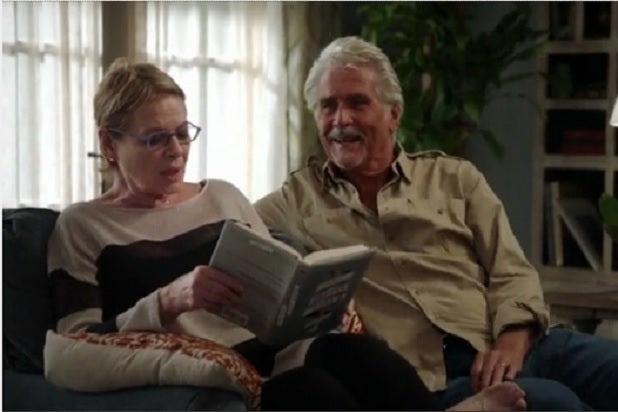
thewrap.com ... and yes, I realize that grandparents reading
may not inspire kids, but I couldn't find a photo online
of the youngest daughter reading her book
RELATED NOTE: I watched a couple of episodes of Life in Pieces last night, and was struck by the fact that several characters were shown reading at the start of a few scenes. Another reason it's a great show!

BACK ON TOPIC: Colleagues have told me that there are lots of code.org lessons that don't even require computers; they focus more on "computational thinking" and problem-solving. Which I'm all for. However, I was hired to teach information/media literacy, as well as to run a circulating library. I already don't have enough time to cover everything I'd like in the (max) 12 instructional hours PER YEAR I have my kids. I'd be happy to deliver a coding/tech curriculum, but it would have to be during a dedicated coding/tech time.


Professional Development

I'm not being formally evaluated this year, but I have ideas for my Professional Growth Goal for next year. Being Indispensible: A School Librarian's Guide to Becoming an Invaluable Leader by Ruth Toor and Hilda K. Weisburg will probably factor into it.

Friday, August 19, 2016

Ideas from March/April 2015 American Libraries

Gamification


What learning/circ challenges can you present your students in the guise of a game? Bohyun Kim points to thefuntheory.com for lots of examples of gamification influencing consumer behavior. I wish the article include specific ideas for libraries. But I guess that's up to us! I've found that any time I present an assignment as a competition between teams, the kids' engagement goes up exponentially.

Edited to add this from summer 2016 issue of Entrsekt: Gamification strategies include leveling up, missions, visual maps, rules and obstacles, and extended simulations.

Pegagogy/Curriculum Development


An article by Joan Lippincott suggest several ways in which librarians can support "new types of assignments that require students to produce projects using a variety of technologies as a means to:

  • increase student engagement with course content
  • provide students with opportunities to explore new media technologies and innovate in their academic work
  • increase individualization of assignments, which can also reduce plagiarism
  • facilitate student expression in media that are not purely textual"

FMSS Library
The article is geared towards academic libraries, and I have to say, one of the scariest sentences in the article is " ... it is also often noted that few faculty have had any formal preparation for teaching. Similarly, there are many academic librarians who have had no formal preparation to take on teaching roles." Yikes!

Luckily, K-12 librarians do have some (but not enough) teaching training before they arrive in their own classrooms. Often, however we are closer to our grad school courses than the classroom teachers we work with. I die a little inside every time I hear of a PowerPoint being assigned (especially if the kids are given a limit on the number of [way too text-heavy] slides and not expected to credit image sources). There are so many more options including:

  • "creating a website or a video
  • working with other students on a group project
  • collecting, analyzing, and presenting data
  • solving problems
  • incorporating special collections materials into a media product
  • conducting an interview with someone in a remote location
  • making a physical object"

My PGG next year may involve collaborating more with classroom teachers to create more authentic learning assignments.


School Librarian as Learning Alchemist


Things I want to do this year:

  • have kids bring their own devices with them to try out web sites/apps and do research
  • make all extra-credit assignments available online for those who might want to go back at the end of term to add more points to their scores
  • spend more time on fact v. opininon, which ties into "teaching students how to evaluate the credibility of information"


Search Engines for Kids


Oh, my, look at this gorgeous site from DK.  

Wednesday, August 26, 2015

Am I Doing Enough?

I have spent the summer having regular anxiety attacks about all of the stuff I'm NOT doing ... even though after this school year, I fully deserved a true vacation free of stress. And it's not like I've done NOTHING ... I've definitely kept up on the latest picture books for Mock Caldecott thanks to this Starred Titles spreadsheet maintained by Jennifer Jazwinski, and I've collected links on Pinterest that I can use to supplement lessons.

But there are so many people out there doing so many other things. And many of them are featured in AASL's Knowledge Quest. I am only just now getting to the 2014 issues, and every other article causes me anxiety - again, because all of the stuff I'm NOT doing. But then, there's a lot of stuff I just don't have ... a single school, a flexible schedule, enrichment blocks, enough computers for an entire class to use, a budget for more than 50 books ... the list goes on and on.

So I'm going to think in terms of baby steps. Realistically, what are some best practices and innovative ideas that I can incorporate into my libraries?

Gold stars for me!


As I went through a few very old issues that I had read last summer but not yet recycled, I came across several suggestions that I had already adopted:


en.paperblog.com
  • After reading Andy Plemmons' article about building participatory culture in the Sept/Oct 2012 issue, I had my 5th-graders go through publisher catalogs and compile wish lists this past spring. They found a ton of stuff I hadn't even heard of; books/series with multiple requests bumped some of my previous choices off my order - I want items that the kids themselves have asked for! Fingers crossed that 6th-grade circulation numbers will go up this year.

  • I had decided to move biographies of sports figures and explorers to 796 and the 900s, respectively, a couple of years ago. After reading the Nov/Dec 2013 issue about rethinking Dewey, I tackled more sections, integrating fairy tales and poetry into the E and FIC sections, and, conversely, pulling all of the holiday books scattered across multiple sections into one new H call number. "Scary" books also got put into their own bucket and had their call numbers updated. I have stopped looking at any digits beyond the decimal, and the 796 section is now in alphabetical order by sport instead of author.

  • Finally, I took to heart Holli Buchter's finding that "Kindergarten students prefer nonfiction materials to picture story books at a ratio of 9 to 1" and put a lot more nonfiction books out for them to choose from on their circulation days. Sure enough, there are rarely any books about animals (the bulk of my early nonfiction, or NF section) left on the tables after checkout.

What's Next?


As mentioned above, I teach at two schools; I'll be returning for my fourth year at one, but, thanks to a restructuring of the schedule, starting new at the other. This is also causing anxiety. Luckily, the principal has already been friendly and supportive, and several people in the district have told me they think the new school will be a good fit for me. But I am still walking into a new space and meeting 300 new kids and 25 new faculty members.

In the March/April 2014 issue, Jessica Gilcreast outlines her goals for her first few years in a new school. I am trying to accept that, like her, "There were a million things I wanted to change, and a million and one things I wanted to do, but I knew I had to be methodical and organized." So here's how she set her goals:

  • Year 1: Weed, rearrange, build relationships, write a grant.

  • Year 2: Continue weeding, provide teachers with PD opportunities focused on using a new SMART board, create a tech space for said board, write a grant, add multicultural books to the collection

  • Year 3: Work with teachers in grade-level meetings to increase collaboration, write a grant

  • Year 4: Run the book fair and create related reading events

  • Years 5 and 6: Focus on staff PD, literacy events, ditching Dewey


After all of these changes, she notes, "No longer was I merely the provider of a prep period for teachers; the school library had become an extension of the classroom." I'll get there eventually. Baby steps.


Wednesday, August 12, 2015

RICBA Nominees 2016

Kinda Like BrothersKinda Like Brothers by Coe Booth
My rating: 5 of 5 stars

Wow. We need more books like this in my schools. So real, so fresh, so true ... Coe Booth doesn't sugar-coat anything. I appreciate that Jarrett makes bad decisions and then has to deal with the consequences. His emotions are spot-on.


El DeafoEl Deafo by Cece Bell
My rating: 5 of 5 stars

So well done. Also reminded me that I'd never want to be a kid again.


Neighborhood Sharks: Hunting with the Great Whites of California's Farallon IslandsNeighborhood Sharks: Hunting with the Great Whites of California's Farallon Islands by Katherine Roy
My rating: 5 of 5 stars

This should be a model for how to write nonficton for lower grades! Super interesting, fantastic illustrations, not too much information, but definitely a lot of facts to absorb. Can't wait to share with my kids.


Absolutely AlmostAbsolutely Almost by Lisa Graff
My rating: 4 of 5 stars

Oh, Albie.

Newbery criteria mentions "distinguished" a lot, which I know is not the same as "distinctive," but Graff has created a unique character here in that he is in fact NOT distinctive. He's just kind of stumping along in a below average way. And by the end, he's kind of ok with that (although disappointed to not be diagnosed with a reading disorder, because that would have made his parents feel better).

In a society where the pressure is on to not only keep up but edge out, and in a literary landscape full of precocity and amazing talents, this book stands apart.

It reminded me of an article a friend sent me last week, titled "You Don't Have a Purpose." She said it made her feel relieved - it encourages the reader to find a career or life they love, but tells them to stop wasting energy looking for a Purpose with a capital P. Kind of like how Donut Man doesn't HAVE to have superpowers. He can just be a nice guy who likes donuts. Be nice. Choose kind. That's enough.


Death by Toilet PaperDeath by Toilet Paper by Donna Gephart
My rating: 4 of 5 stars

This book deals with a lot more serious issues than you'd think from the cover - death, eviction, dementia. But they're handled pretty well by the author, and the main character's optimism avoids being Pollyanna-ish. I also really liked all of the toilet paper facts at the beginning of each short chapter ... but does the average person REALLY go 6-8 times a day? (Actually, my boyfriend just said he thinks he goes 10 times, so I guess we average out to the stat ... )


Rain ReignRain Reign by Ann M. Martin
My rating: 4 of 5 stars

This is one of those books on the list that I picked up reluctantly ... a girl with Aperger's and her dog? Not my favorite topics. But I really really really liked it. Rose's narration was matter-of-fact yet sweet, and I loved that she tried to find solutions to her problems.


The Night GardenerThe Night Gardener by Jonathan Auxier
My rating: 4 of 5 stars

I'm still kind of confused as to how the tree came to be, but I enjoyed the storytelling. Speaking of which:

p. 207: "Stories come in all different kinds. ... There's tales, which are light and fluffy. Good for a smile on a sad day. Then you got yarns, which are showy - yarns reveal more about the teller than the story. After that there's myths, which are stories made up by whole groups of people. And last of all, there's legends." She raised a mysterious eyebrow. "Legends are different from the rest on account noone knows where they start. Folks don't tell legends; they repeat them. Over and again through history."

p. 214: "You asked me for a story; now you call it a lie." She folded her arms. "So tell me, then: what marks the difference between the two?" ... "A lie hurts people," she finally answered. "A story helps 'em."


Kate Walden Directs: Night of the Zombie ChickensKate Walden Directs: Night of the Zombie Chickens by Julie Mata
My rating: 4 of 5 stars

Realistic portrayal of middle-school friendship woes. Alas, I'm not sure if any of my kids will read it; in going over the RICBA titles, they're getting all excited about the zombie part of the title ... once they realize it's not about zombies, I fear they will abandon it.


Joltin' Joe DiMaggioJoltin' Joe DiMaggio by Jonah Winter
My rating: 4 of 5 stars

Winter's style is going to make for an easy readaloud. Lively and informative.


Star Stuff: Carl Sagan and the Mysteries of the CosmosStar Stuff: Carl Sagan and the Mysteries of the Cosmos by Stephanie Roth Sisson
My rating: 4 of 5 stars

This is going to make for some fantastic lessons next year.


Loot (Loot #1)Loot by Jude Watson
My rating: 3 of 5 stars

A decent addition to the middle-grade heist genre, but I felt like it started getting sloppy near the end. I would buy for the collection, though, for those kids who like adventure.


The Red PencilThe Red Pencil by Andrea Davis Pinkney
My rating: 3 of 5 stars

A children's novel in poems that are actually "poetic" is a rare thing these days. Unfortunately, the very quality I appreciate may be a turnoff to my students.


Little Green Men at the Mercury InnLittle Green Men at the Mercury Inn by Greg Leitich Smith
My rating: 3 of 5 stars

I was totally on board - even with wonky science "explanations" - until the big reveal on page 157. Then things got bonkers.


Another Day as EmilyAnother Day as Emily by Eileen Spinelli
My rating: 3 of 5 stars

I greatly enjoyed Suzy's attempts to go recluse. I did not, however, enjoy "the verse" ... another occurrence, to me, of an author just sticking returns throughout their sentences.


Winter Bees & Other Poems of the ColdWinter Bees & Other Poems of the Cold by Joyce Sidman
My rating: 3 of 5 stars

I preferred the factual information to the poems.


Life of Zarf: The Trouble with WeaselsLife of Zarf: The Trouble with Weasels by Rob Harrell
My rating: 3 of 5 stars

For me as a reader, this was just ok. But my kids are going to LOVE it. Adventure, bad jokes, cartoon illustrations ... they will eat it up.

I did appreciate this description on p. 11: "If there were a Stress Olympics, he'd take the gold all day long - but then he'd probably drop dead from a panic attack on the winners' podium."


Mr. Ferris and His WheelMr. Ferris and His Wheel by Kathryn Gibbs Davis
My rating: 2 of 5 stars

I was distracted by the separate background information, which was presented in a different font in a corner of the double-page spreads. I wish it had been woven into the main text.


The Map TrapThe Map Trap by Andrew Clements
My rating: 2 of 5 stars

I was looking forward to doing this as a RICBA readaloud and tying in lots of maps and data visualization ... and then came the (kind of) reveal of the thief/blackmailer. Ew. Ruined it.


The Swift Boys & MeThe Swift Boys & Me by Kody Keplinger
My rating: 2 of 5 stars

Pretty realistic look at the ebbs and flows of friendships.

Issue: Why is a character self-described as "chubby" portrayed by a tall skinny girl on the cover?


The Vanishing Coin (The Magic Shop Book 1)The Vanishing Coin by Kate Egan
My rating: 2 of 5 stars

Lackluster. But fills a void - easy illustrated chapter books for kids older than age 7.

Sunday, March 29, 2015

What's the Most Important Thing?

It's a question I ask myself every morning when I walk into one of my libraries and am overwhelmed by the crazy amount of work in front of me for the day: What's the most important thing?

And lately I've been asking it not just in the context of my daily to-do list, but my entire mission as a school librarian.

Reality bites

After I left the corporate world, library grad school led me to believe that I would spend my time working with classroom teachers to devise high-order-thinking research projects with tech-heavy final products. Not so much.

source: pixgood.com
There's just no time for this kind of collaboration - I'm split between two schools, have 31 classes to keep track of at 9 grade levels with students who range in age from 3-12, lack access to enough computers for a full class (up to 28 students), and only see the kids for 30 minutes a week. (On top of that, because of the short periods, week 1 is a lesson week and week 2 is a checkout week.) Even trying to coordinate library time with classroom projects already in progress doesn't work very well if kids' notes are due on Thursday and I only see them on Fridays.

I've tried library-time-only sustained research projects, but they were a disaster. Even if kids were working together and sharing laptops, by the time they had reviewed their work from the last time, gotten online, and managed to find a trustworthy web site (many couldn't even get this far), class was just about over. Gathering a couple of facts a week - even during those checkout weeks - does not make for momentum.

Seeing what other librarians post on Twitter or share via articles was making me depressed, until a colleague in another district revealed that the amazing projects she was tweeting out were the result of enrichment "boost blocks": three 45-minute periods a week for six weeks. 810 minutes. I have 600 instructional minutes A YEAR with my kids.

source: popsugar.com
So it would take AN ENTIRE YEAR PLUS SUMMER SCHOOL for me to do what I feel my job should really be. Leaving no time for reader's advisory, digital citizenship, or just reteaching the kids (AGAIN) how the catalog works and where to find call numbers on the shelf.

Ok. Reality check. Until changes are made to the system, I cannot achieve the ideal. So what value CAN I bring to my students, with the time and resources we're given, that will have a lasting impact?

Read me a story

As Common Core standards have been put into practice, I've become concerned about my students being able to just ENJOY a text without having to parse it for theme, author's purpose, evidence, etc. Yesterday I read the cover story of the most recent issue of American Educator - "For the Love of Reading: Engaging Students in a Lifelong Pursuit" by Daniel T. Willingham - and I share Willingham's concern "that children might confuse academic reading with reading for pleasure. If they do, they will come to think of reading as work, plain and simple."

source: randomhouse.com
When I heard that I would be thrown out of my libraries at both schools for three weeks in March because they were needed for PARCC testing, I let my principals and classroom teachers know that I would be throwing out my planned lessons and doing readalouds instead. The reaction was pretty universal: "Oh, my kids love readalouds. It's one of their favorite parts of the day."

I was relieved to have no pushback and set about choosing the books I would read.

At one school, author Mark Tyler Nobleman is coming to speak during Reading Week, so I am sharing his Boys of Steel and Bill the Boy Wonder with grades 3-6. They spurred some great discussions about intellectual property - a topic in my curriculum.

source: amazon.com
For 6th grade at my other school, I went with Newbery-winner The Crossover by Kwame Alexander. The students had played the annual basketball game against another elementary school the prior week, so I thought it would hold their attention. About 10 minutes into the book, a student (who has read nothing but Sports Illustrated for Kids all year) asked me if he could check the book out.

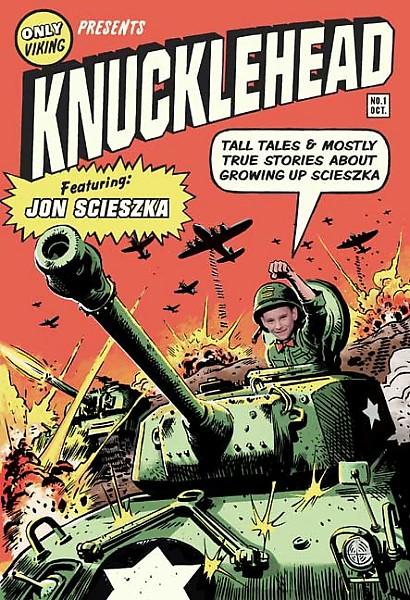
On a colleague's recommendation, I chose Jon Sciezska's Knucklehead for 5th grade. Noisy and rambunctious themselves, they loved hearing his crazy stories about growing up. It only took 5 minutes for me to hear a student tell his friend, "I am so getting this book out of the library."

Obviously, these readalouds were a success.

Checking it out 

source: blogs.slj.com
But here's the thing. I've put Knucklehead out on display before. When I pointed out to the 5th graders who wanted to borrow it that it's been in the library their entire elementary school lives, one student said, "Oh, yeah, I saw it, but I never picked it up."

How do I get kids to pick up the books?

On checkout weeks, I'm overwhelmed. Especially on a day where I see 8 classes - more than 200 kids - it's all I can do to keep up with the returns, the holds, the ILLs, and the circulation desk traffic. I make personalized suggestions when I can, especially if someone turns in their library card without taking anything out. But that's usually in the last 30 seconds, as their class is trailing out the door, and the next group is coming down the hall. The response is usually, "Maybe next time," and then two weeks later we have the same exchange.

So I'm starting to think ... why not give over more of our "lesson" time to booktalking? To exploring resources for figuring out what to read next? To creating reading plans?*

source: nationalpost.com
Kids are going to be taught the research process in middle school and high school. They will receive training in web searching, note taking, and paraphrasing, among a plethora of other skills. But will they receive training in choosing a book for recreational reading?

I know some teachers might assign pleasure reading in the upper grades, but as Willingham notes, "If a teacher makes pleasure reading a requirement (10 minutes per night, say) or demands accountability (by keeping a reading log, for example), she risks sending the message that reading is nothing students would do of their own accord." He also states that tracking the number of books or pages a student has read "puts too much emphasis on having read rather than on reading."

So what if my goal for each student next year is this:

source: one-story.com
Find a book you love.

And I mean LOVE - a book you want to marry, a book you think everyone you know should read, a book you could dance about.

Is this a goal that can be made into a Student Learning Objective for my evaluation? I'm not sure.

But is it the most important thing? Maybe.


* Idea from my colleague Melanie Colangelo Roy
Creative Commons License
This work by Meredith C. Moore is licensed under a Creative Commons Attribution-NonCommercial-ShareAlike 3.0 Unported License.